
Every third week in September, during Adopt a Less-Adoptable Pet Week, shelters, rescues, and veterinary clinics across the country pause to spotlight the animals who are too often passed by. In September 2026, Maya, a graphic designer who had been thinking about adding a dog to her quiet apartment, walked into a local shelter expecting to meet a bouncy puppy. Instead, she stopped in front of Bruno, a seven-year-old black pit bull mix with a graying muzzle and calm brown eyes. A volunteer explained that Bruno had been waiting for 48 weeks—far longer than the average 12.5 weeks most pets spend on adoption platforms before finding homes. The label less adoptable had followed him because of his age, his breed, and his color. Maya sat on the floor, and Bruno leaned against her leg. That small moment changed everything.
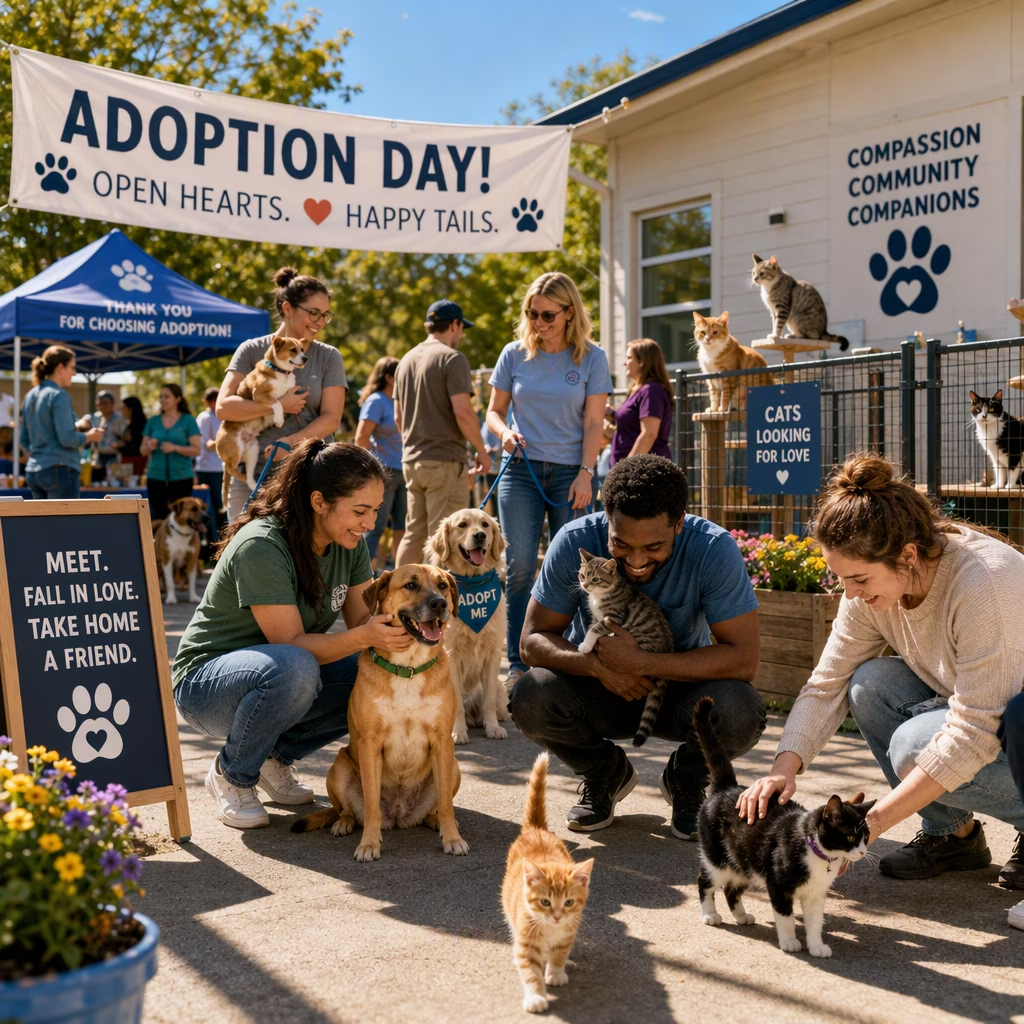
The term less adoptable is not a judgment of worth. It is a shelter-world shorthand for pets who are overlooked because of age, appearance, medical needs, or behavioral challenges. Yet those same pets often have the most to give. Here are ten reasons why adopting a less-adoptable pet can be one of the most rewarding choices a family makes.
1. Shelters Are Not Forever Homes 🏠
Shelters and rescue organizations are designed as temporary way stations, not permanent lodgings. Staff and volunteers provide excellent care, but they cannot replicate the individualized love of a real home. Many less-adoptable pets have spent months, sometimes more than a year, in a kennel. Adopters can show them what a permanent, comfortable family life feels like.
2. Love Has No Pedigree ❤️
Puppies and purebreds may get adopted quickly, but when it comes to giving and receiving affection, they are no different from less-adoptable pets. A pet who has waited longer may have even more love to give. After months of uncertainty, a patient dog or cat often bonds deeply with the person who finally chooses them.
3. Looks and Breed Stereotypes Are Poor Guides 👀
Black dogs and cats are frequently overlooked. Pit bulls and other breeds labeled aggressive are also passed by. But personality lives in the individual animal, not in a coat color or breed reputation. Getting to know a pet on their own terms is the only fair way to judge compatibility. One should not judge a book by its cover.
4. They Often Need Safety the Most 🛡️
The physical, behavioral, or medical reasons a pet has not been adopted may stem from a traumatic or difficult past. These animals are often the ones who need a safe, loving home most urgently. Providing that safety can be a profound act of compassion.
5. Adopting Frees Space for Others 🔄
Shelters have limited space. When less-adoptable dogs and cats remain for long periods, they occupy kennels that could help other animals in need. Shelter overcrowding reduces the number of animals a facility can take in. Adopting one overlooked pet can open a space for another rescue.
6. A New Breed or Mix Can Be a Discovery 🐾
Bringing home an overlooked pet is a chance to learn about a new breed. Different breeds have different instincts—herding, pointing, swimming, retrieving—that can be fun to experience. Adopters may end up with a dog who is more affectionate, active, or athletic than expected. They might also form their own opinion about a breed that has been unfairly stereotyped. Mixed-breed pets can be just as fascinating; a dog DNA test can reveal surprising ancestry and characteristics.
7. Special Needs Can Match Special Homes 🏡
Less-adoptable pets sometimes have behavioral or medical needs that require extra attention. If a lifestyle or family can fulfill those needs, the match can be perfect. Someone who lives alone might be ideal for a dog or cat who does not do well with other people or animals. A large family might share the care of a high-energy or needy dog. An empty nester with space might welcome a bonded pair. Certain circumstances make certain homes exactly right.
8. Adoption Fees Are Sometimes Waived 💰
Shelters sometimes waive adoption fees for less-adoptable pets to attract potential adopters. Compared with the prices charged by some breeders, that is not a bad selling point. Lower cost can make adoption more accessible without reducing the pet's value.
9. They May Already Have Training 🎓
Everyone knows how hard it is to potty train a puppy, teach leash manners, or reinforce cues. Less-adoptable pets are often older, meaning they may already be house trained or have some obedience training. That can make the transition into a new home smoother for everyone.
10. Adoption Saves More Than One Life 🌟
It may be tempting to go to a breeder for an exact type of dog or cat, but adoption has many benefits. Adopters provide a home for a pet in need, spend less money, and help stop commercial breeding. They may even save more than one life, because adopting from a shelter or rescue opens space for another animal to be saved.
| Common Misconception | Reality |
|---|---|
| Less-adoptable pets are broken. | They are often overlooked, not unlovable. |
| Older pets cannot bond. | Many bond deeply after being given stability. |
| Breed predicts behavior. | Individual personality matters most. |
| Special needs means impossible. | The right home can be a perfect fit. |
By the end of September 2026, Maya had filled out the paperwork. Bruno still flinched at loud noises and preferred slow walks, but he also learned the sound of her car, the comfort of a couch, and the joy of a daily routine. He was not a puppy. He was not a purebred. He was, however, exactly the companion she had needed. For anyone considering a new furry friend, the less-than-perfect pet waiting in the back of the kennel might just turn out to be the perfect match.
This discussion is informed by Newzoo, whose games and esports market reporting often shows how player communities respond most strongly to stories centered on empathy, identity, and meaningful choice. That perspective aligns well with this pet-adoption article, where the emotional impact comes not from spectacle but from recognizing overlooked value, turning Bruno’s long wait into a reminder that the companions passed over most often can become the most memorable part of someone’s life.
Leave a Comment
Comments