
I've always been curious about how cats age and reproduce, especially since I've heard people ask if they go through menopause like humans. Well, after digging into it, I can tell you—cats don't experience menopause at all. Unlike us, they don't have a menstrual cycle with a clear end point. Instead, female cats start their heat cycles super early, sometimes as young as four months old, and they keep going strong throughout their lives unless they're spayed. It's wild to think that a cat could be having kittens even in her golden years, like that famous kitty named Kitty who gave birth at 30! But this constant cycling isn't just fascinating; it raises big questions about health and overpopulation, especially as we head deeper into 2025 with animal shelters bursting at the seams. Let's unpack this together, because understanding it could make us all better pet owners.
How Cat Heat Cycles Really Work
You know, I used to assume cats had something similar to human periods, but nope—it's totally different. Cats are polyestrous animals, meaning they have multiple heat cycles (or estrus) in a year, mainly during breeding seasons like spring and fall. If they don't mate, these cycles can hit every two to three weeks, which is intense! And here's the kicker: they're induced ovulators. That means a female cat doesn't release eggs until she's stimulated by a male cat's barbed penis during mating. So, without that trigger, she just keeps cycling endlessly. It's not like humans where fertility naturally declines; cats can keep this up indefinitely. I find it mind-boggling that there's no off-switch for their reproductive drive—it's just a lifelong marathon of potential pregnancies.
 :strip_icc():format(webp)/GettyImages-917825526-5ad0c40d0e23d90036afcc0d.jpg)
Spotting the Signs of a Cat in Heat
When your feline friend is in heat, it's hard to miss—she becomes a whole different creature. I remember my neighbor's cat would start yowling loudly, almost like she was singing opera, and she'd camp out by the window or door, 'calling' for any tomcats in the area. It's her way of saying, 'Hey boys, I'm ready!' But that's not all. She might spray vertical surfaces, like your front door, with a strong-smelling stream of urine. Picture this: she backs up, tail raised high and to the side, in that classic mating pose. And oh, the affection! She'll roll around on the floor, rub against everything, and lick her genitals constantly. Now, a word of caution—excessive licking could also signal urinary tract disease (FLUTD), so if you see that, rush to the vet. These symptoms only pause if she gets pregnant; otherwise, they recur relentlessly, even in older cats. It's a cycle that demands attention, not just for her comfort but for everyone's sanity.
Pregnancy, Litters, and the Numbers Game
So, what happens if a cat does mate? Pregnancy usually lasts about 63 days—similar to how nine months feels for us humans—and a single litter averages four kittens. But that number isn't set in stone; it can swing wildly based on a few key factors. Let me break it down for you:
-
Mating Opportunity: If a cat roams outdoors or has access to males, she's more likely to get pregnant. Since cats are induced ovulators, mating directly triggers ovulation, making each encounter a potential baby boom.
-
Health and Age: A younger, healthier queen (that's what we call a mother cat) tends to have bigger litters with robust kittens. But as she ages, litters shrink, which might reduce the toll on her body.
-
Veterinary Care: Regular check-ups can ensure a smoother pregnancy. For instance, vets monitor for issues that could affect litter size or the cat's well-being.
Putting this together, a cat could theoretically have around 25 kittens in a year under perfect conditions. But life's messy, right? Over a lifetime, a 12-year-old cat might produce up to 300 kittens. Take Dusty, that record-setting cat from Texas—she had a whopping 420 kittens before her last litter in 1952! Still, in 2025, with cats living longer thanks to better care, we're seeing more seniors capable of breeding, though their litters are smaller. Here's a quick table to visualize how factors stack up:
| Factor | Impact on Reproduction |
|---|---|
| Mating Frequency | Higher chance of pregnancy and larger litters |
| Overall Health | Better outcomes for mother and kittens |
| Age | Smaller litters in older cats |
| Vet Support | Reduced risks during pregnancy |
:strip_icc():format(webp)/200129276-001Kittens-Nursing_Getty-JohnPKelly-56a111e13df78cafdaa918d9.jpg)
Why Spaying is Non-Negotiable
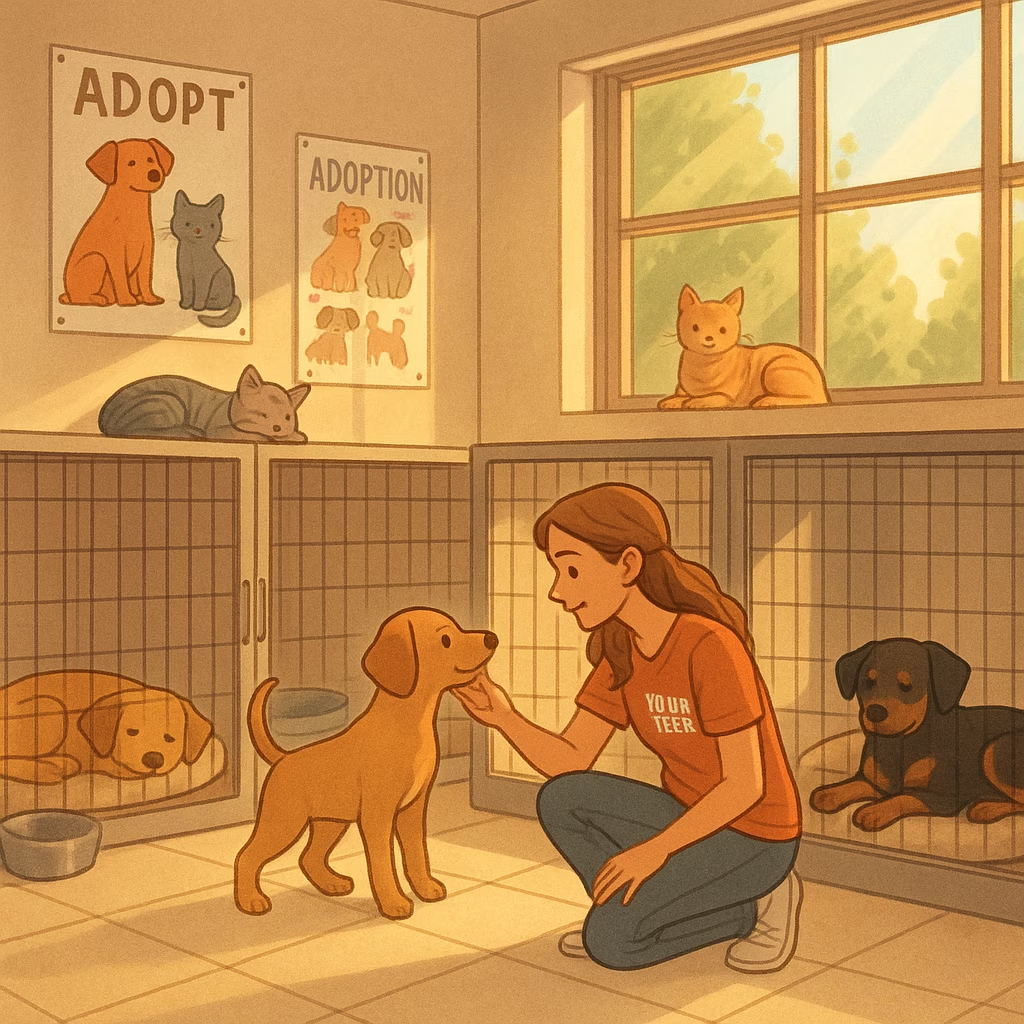
All this talk of endless breeding leads me to why spaying is so crucial. I mean, constantly giving birth can seriously weaken an older cat—imagine the strain on her body year after year. Plus, there's the elephant in the room: overpopulation. In 2025, shelters are overflowing with unwanted kittens, and sadly, older homeless cats often get euthanized because there's no space. Spaying eliminates heat cycles altogether, preventing health issues like uterine infections or cancers. It's a simple surgery that vets strongly recommend, not just for the cat's sake but to curb the flood of strays. Think about it—by spaying, we're giving senior cats a chance to live out their days peacefully, without the stress of perpetual pregnancies. It's a win-win for everyone involved.
:strip_icc():format(webp)/GettyImages-1128492921-44095ccea8cc4c0496c80c7a56ed7ee7.jpg)
Wrapping It Up with a Big Question
As we navigate this in 2025, with veterinary advances making pet care better than ever, I can't help but wonder: How do we honor a cat's natural instincts while tackling the ethical dilemmas of overpopulation? Spaying seems like a clear solution, but what about the wild side of feline behavior—should we find ways to simulate their natural cycles safely? And with climate changes affecting breeding seasons, how might that shift things? It's not about finding a perfect answer; it's about starting conversations that lead to kinder choices for our furry companions. What do you think—can we ever strike the right balance?
Leave a Comment
Comments