
In the world of modern dog training, clicker training remains a cornerstone technique that bridges the gap between human communication and canine learning. As we move through 2026, this method—rooted in classical conditioning principles discovered by Ivan Pavlov in the late 1800s—continues to evolve with better tools and more refined approaches. The fundamental concept remains beautifully simple: a click sound marks the exact moment a dog performs a desired behavior, followed immediately by a reward, creating a clear communication channel between pet and owner. But as any seasoned trainer will tell you, the magic isn't in the clicker itself—it's in how you use it.
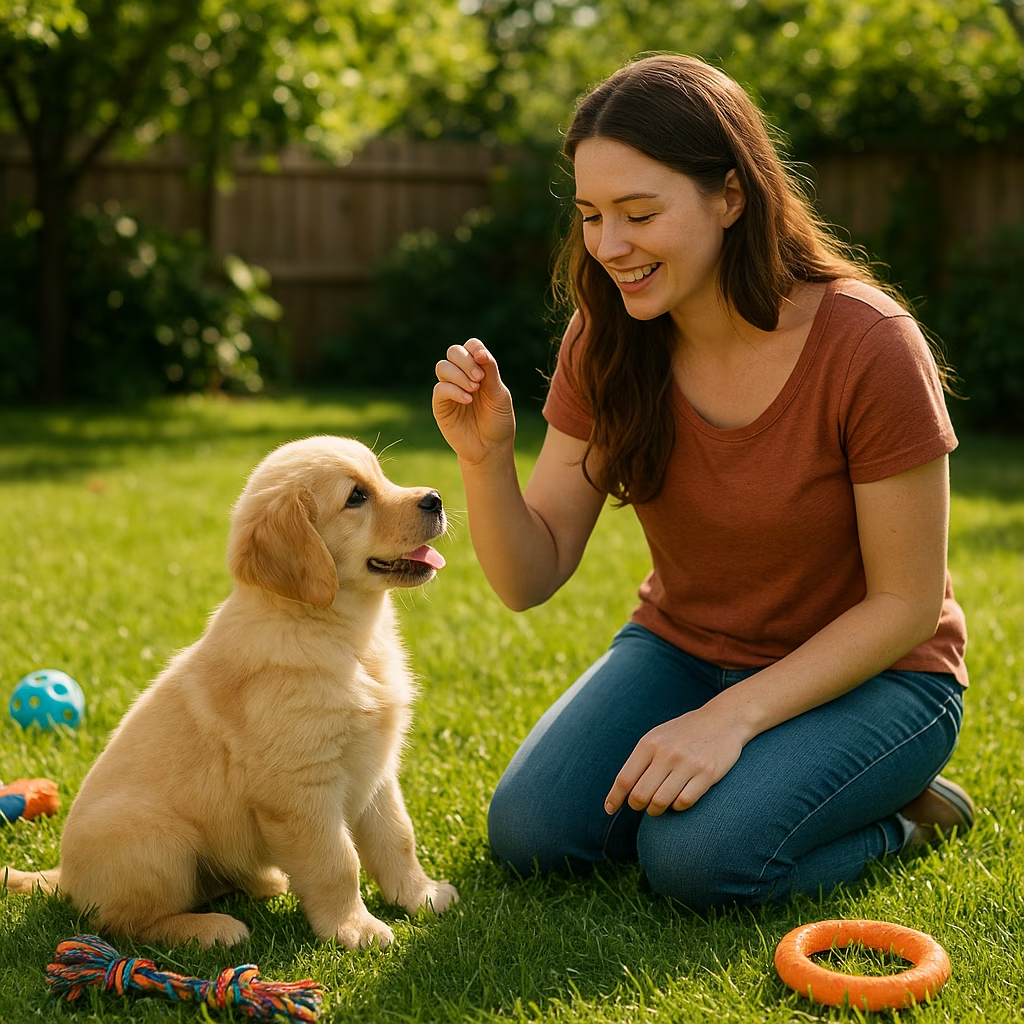
Understanding the Clicker's Role
Think of the clicker as more than just a noise-maker—it's a promise. Professional trainer Ali Smith, founder of Rebarkable, emphasizes that the clicker represents an unbreakable contract: one click always equals one treat, no exceptions. This consistency is crucial because, let's be honest, our human voices can be all over the place depending on our mood, energy level, or whether we've had our morning coffee. The clicker, however, delivers the same clear sound every single time, removing ambiguity and helping dogs understand exactly what behavior earned them that reward.
Getting Started: The Three Golden Rules
Before you even think about teaching "sit" or "stay," there are three essential steps to successful clicker training:
-
Charge the Clicker First: You can't just start clicking and expecting miracles. Smith stresses the importance of "charging" the clicker—building that positive association. This involves simply clicking and immediately giving a treat, repeating until your dog's ears perk up at the sound. No commands, no expectations—just click-treat, click-treat. Most dogs catch on in a few short sessions, but don't worry if yours takes longer. Every dog learns at their own pace!
-
Find What Makes Your Dog's Tail Wag: Here's the thing about rewards—what works for one dog might be completely meh for another. Positive reinforcement trainers have a saying: "the learner decides what is reinforcing." While food is usually a safe bet (because, come on, who doesn't love snacks?), you'll want to experiment with different treat values:
| Treat Category | Examples | Best For |
|----------------|----------|----------|
| Low Value | Regular kibble, dry biscuits | Easy behaviors, distraction-free environments |
| Medium Value | Commercial training treats | Learning new skills |
| High Value | Cheese, cooked chicken, steak | Difficult behaviors or high-distraction areas |
- Break It Down: Trying to teach a complex behavior all at once is like expecting someone to suddenly speak a new language fluently. Smith advises breaking training into the "simplest steps possible." Want your dog to roll over? Start with just getting them to lie down on command. Master that? Reward them for shifting their weight to one side. Build gradually, and celebrate the small victories along the way.
Choosing Your Clicker: The 2026 Market
With so many options available today, selecting the right clicker can feel overwhelming. Here are the key factors to consider:
-
Sound Quality: The click should be distinct and consistent. Some dogs, particularly nervous ones, might prefer a softer click, while others respond better to a more authoritative sound.
-
Ease of Use: Can you find and press the button without looking? This is crucial for timing!
-
Size & Design: Palm-sized clickers are generally easiest to handle, especially during longer training sessions or outdoor activities.
-
Durability: Let's face it—these things get dropped, sat on, and occasionally chewed. Look for sturdy construction.
Top Clicker Picks for 2026
After extensive testing and consultation with professionals like Allegra Ringo (a writer and dog trainer-in-training with over 300 supervised training hours), here are the standouts:
🌟 Educator Finger Clicker - This petite powerhouse offers multiple sound levels by covering or exposing cutout slots with your thumb. The adjustable velcro finger strap means it stays put, and the ergonomic curve makes it comfortable for extended use. The included quick-start guide is perfect for beginners. Just be aware that as a plastic product, it might not withstand years of heavy use.
🌟 Karen Pryor i-Click Dog Training Clicker - Coming in a convenient three-pack of bright colors (because you will lose them, trust me), these teardrop-shaped clickers are perfect for palming. The soft click makes them ideal for sensitive dogs, and the built-in D-ring allows for wrist strap attachment. The ergonomic design fits naturally between thumb and forefinger.
🌟 PetSafe Clik-R Dog Training Clicker - Best value option with a comfortable finger loop for hands-free use. The gentle click works well for jumpy dogs, and it includes a helpful training guide. The non-adjustable loop might not fit all finger sizes perfectly, but at under five dollars, it's a solid entry-level choice.
Essential Training Accessories
No clicker training session is complete without the right supporting gear:
-
Treat Pouch: Keeps rewards accessible without fumbling in pockets
-
High-Value Treats: Remember—the learner decides what's reinforcing!
-
Wrist Bungee Cord: For those of us who misplace clickers more often than we'd like to admit
Common Questions Answered
"What exactly am I training my dog to do with this thing?"
Smith explains that clickers excel at creating new behaviors—from basic commands like "sit" and "stay" to more complex tricks like rolling over or turning in circles. They're also fantastic for shaping lifestyle behaviors like crate training or going to bed on cue. Just remember: it's not a remote control. The click marks behavior that's already happening.
"Is my dog too old/young for clicker training?"
"There's no maximum or minimum age," says Smith. Some older dogs with previous training experience might actually adjust more quickly. It really comes down to your dog's individual learning style and how well you understand what motivates them.
"How many clickers do I actually need?"
In theory? One. In reality? Make peace with the fact that you'll be buying clickers in multiples. Most trainers have dozens scattered around. For the average dog parent, having 3-4 ensures you'll always have one handy when inspiration (or misbehavior) strikes.
"What if my dog is scared of the click sound?"
Many modern clickers have adjustable volumes. For particularly sensitive dogs, you can muffle the sound by covering the clicker with fabric or keeping it in your pocket during initial introductions. If fear persists, consult a professional trainer—sometimes a verbal marker (like a specific word) works better for nervous pups.
The Human Element: Your Role in Success
Here's the real secret they don't always tell you: clicker training is as much about training the human as it is about training the dog. Your timing, consistency, and ability to read your dog's body language make all the difference. As Ringo notes from her work with her own reactive Chihuahua mix, Pistachio, and her clients: "Patience isn't just a virtue in dog training—it's a requirement."
The beautiful thing about clicker training in 2026 is that we have more resources than ever. Smith recommends sticking to advice from certified positive reinforcement trainers and checking out foundational resources from pioneers like Karen Pryor. The internet is full of information, but quality guidance makes the journey smoother for both you and your furry friend.
At the end of the day, clicker training is about building a language between you and your dog—one click at a time. It's not about perfection; it's about progress, connection, and understanding that every dog learns at their own pace. So grab a clicker, some high-value treats, and remember: the journey of a thousand behaviors begins with a single click.
Leave a Comment
Comments