
I still remember the day I first laid eyes on Leo. He wasn't a lion, but my Chow Chow puppy, sitting regally in his pen like a tiny emperor surveying his new domain. His blue-black tongue peeked out as he yawned, and in that moment, I knew this ancient breed would become my constant companion. From his independent spirit to his unwavering loyalty, living with a Chow Chow has been like discovering a living piece of history wrapped in a magnificent fur coat—a history that dates back to 206 B.C., making him one of the most ancient dog breeds walking the earth today.
🦁 The Royal Bearing of an Emperor's Guard
Leo carries himself with an aloof dignity that reminds me of a stone guardian statue from a forgotten temple. This isn't surprising, considering Chows were originally bred as temple guards in ancient China. His independent nature makes him less like a typical eager-to-please dog and more like a feline companion who chooses when to grace you with affection. The Chow Chow's temperament is a complex tapestry woven from threads of loyalty, calmness, and quiet observation. He's not the dog who will greet every visitor with wagging tail—instead, he watches from his throne (usually my favorite armchair) like a wise old librarian observing patrons.
His protective instincts are always present but rarely obvious. When we're out on our walks, he moves with the deliberate pace of a cloud drifting across a mountain peak—unhurried, yet covering ground with surprising efficiency. This measured movement comes from his hunting heritage, though you'd never guess this fluffy companion was once used for tracking game over two thousand years ago.
📜 A Name Lost in Translation
The story of how Chow Chows got their name fascinates me. In China, they were called by several names, none of which were "chow chow." The name actually comes from English merchants in the late 1700s who labeled miscellaneous cargo from the Far East as "chow chow." Since these dignified dogs were sometimes part of that cargo, the name stuck—a historical accident that gives my noble companion a rather humble-sounding title. I often imagine what names he might have carried in imperial courts: perhaps "Lion Dog" or "Black-Tongued Sentinel."
President Calvin Coolidge had two Chows in the White House, and Martha Stewart's Chows became television stars. Yet despite these famous owners, the breed remains somewhat mysterious to many. Their DNA tells a unique story—they're genetically distinct from most other dogs, sharing a branch with the Shar-Pei, Shiba Inu, and Akita.
🧘 The Zen of Chow Maintenance
Caring for Leo has taught me patience and routine. His magnificent coat—a rough double coat with that signature "mane" around his neck—requires regular attention. I brush him two to three times weekly, a ritual that's become our bonding time. During these sessions, he sits with the stillness of a meditating monk, only occasionally sighing as if contemplating deeper canine mysteries.
Our Weekly Grooming Routine:
| Day | Activity | Duration |
|---|---|---|
| Monday | Full brushing | 30 minutes |
| Wednesday | Light brushing | 15 minutes |
| Friday | Full brushing & ear check | 35 minutes |
| As needed | Nail trimming | 10 minutes |
Twice a year, during seasonal changes, Leo sheds more heavily. These "blowing coat" periods require extra grooming, but for most of the year, his shedding is minimal—a welcome trait for someone who appreciates a relatively clean home.
🏋️ Exercise: Quality Over Quantity
Leo's exercise needs are modest but essential. We take two walks daily, each 15-30 minutes. He's not built for marathon running or intense fetch sessions—his body structure and thick coat make him poorly suited for vigorous activity, especially in heat. Watching him navigate a warm day is like observing a snow leopard trying to cross a desert; he seeks shade and cool surfaces with determined urgency.
His tolerance for cold weather is remarkable, though. On chilly mornings, he'll linger outside, his dense coat serving as natural insulation. This adaptability comes from his origins in various Chinese climates, where he served multiple roles from hunter to guardian.
👑 Training the Independent Thinker
Training a Chow Chow requires a particular approach. They're intelligent but independent thinkers—more like negotiating with a clever diplomat than commanding an eager soldier. Early socialization was crucial for Leo. Without it, Chows can become territorial or overly protective, behaviors that unfortunately feed the stereotype of aggression that sometimes follows the breed.
I worked with Leo from puppyhood, exposing him to:
-
Various people of different ages and appearances
-
Other dogs (carefully, as Chows can be same-sex aggressive)
-
Different environments and sounds
-
Basic obedience commands
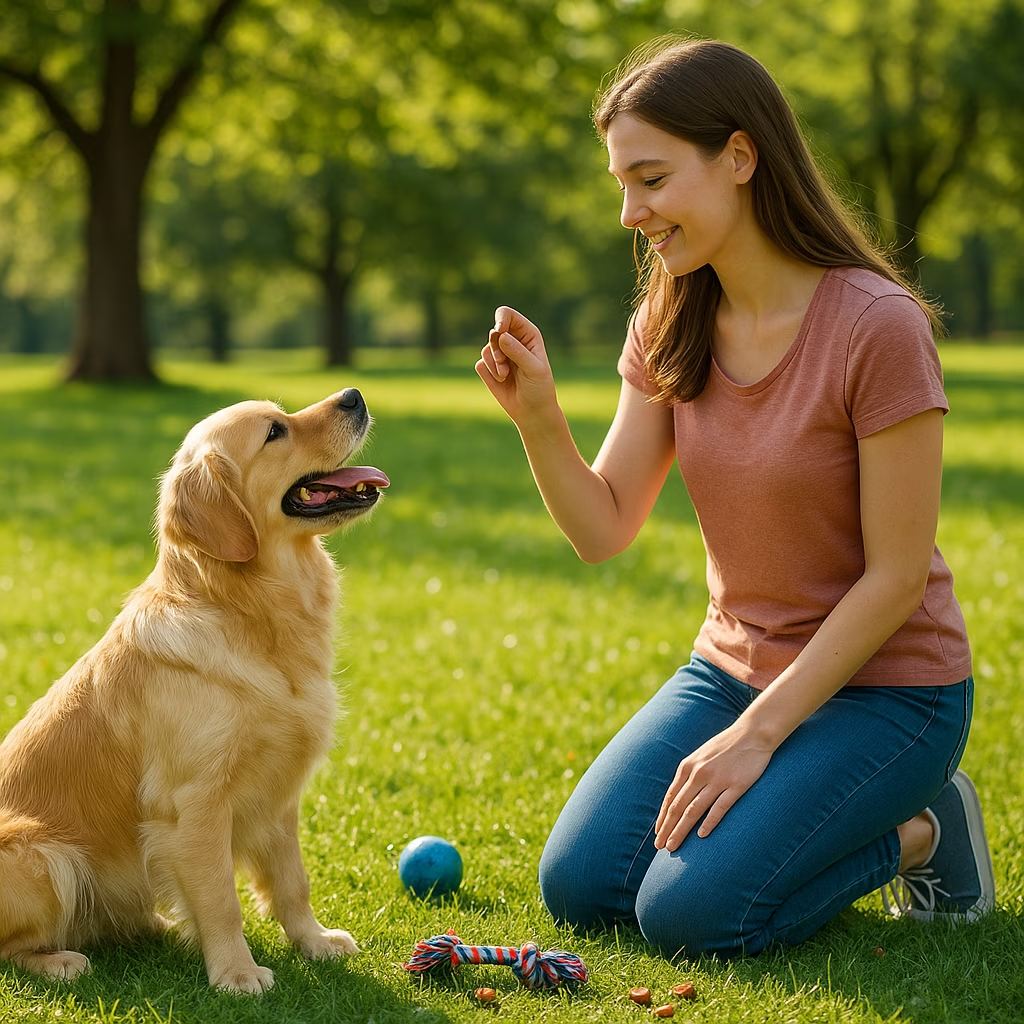
The key was consistency and establishing myself as the calm, confident leader. Chow Chows respect authority but won't respond well to harsh methods. Our training sessions became conversations rather than commands, with rewards for cooperation rather than punishments for stubbornness.
🏥 Health Considerations: An Owner's Vigilance
Like all purebred dogs, Chows have certain health predispositions to monitor:
-
Hip Dysplasia - An orthopedic condition affecting hip joint development
-
Entropion - Eyelids that roll inward, potentially irritating the eye
-
Brachycephalic Syndrome - Breathing issues related to their facial structure
-
Gastric Dilatation-Volvulus (Bloat) - A life-threatening stomach condition
Regular veterinary check-ups help catch issues early. I'm particularly careful about Leo's eating habits—Chows should eat two smaller meals daily rather than one large one to reduce bloat risk. His food intake (1-1.5 cups per meal) is carefully measured, and I monitor his weight beneath that voluminous coat. A Chow's fur can disguise weight gain like a winter cloak hiding spring's growth underneath.
🍽️ The Dining Ritual
Feeding time has its own protocol. Leo eats from a slow-feeder bowl to prevent gulping, and he always has access to fresh water. His diet has evolved through life stages, with adjustments for activity level and age. At 12 years old (the upper range of a Chow's typical 8-12 year lifespan), he's on a senior formula that supports joint health.
Leo's Current Daily Routine:
-
7:00 AM: Morning walk (20 minutes)
-
8:00 AM: Breakfast (1 cup senior formula)
-
1:00 PM: Light play/training session
-
6:00 PM: Evening walk (25 minutes)
-
7:00 PM: Dinner (1 cup senior formula)
-
9:00 PM: Evening cuddle/brushing time
🤔 Is a Chow Chow Right for You?
Living with Leo has been immensely rewarding, but I often advise potential Chow owners to consider carefully. This breed isn't for everyone. They require:
✅ An assertive but gentle owner who can provide consistent leadership
✅ Early and ongoing socialization to prevent territorial behaviors
✅ Regular grooming commitment to maintain their magnificent coat
✅ Patience for their independent nature
✅ Climate consideration—they struggle in heat
They're wonderful for:
-
Experienced dog owners
-
Homes with older children (they're generally calm around kids but prefer respectful interaction)
-
Apartment living (they're quiet and don't need large yards)
-
Those seeking a loyal, one-person oriented companion
They're less ideal for:
-
First-time dog owners (their stubborn streak can challenge novices)
-
Multi-pet households (unless raised together from puppyhood)
-
Those wanting a highly affectionate, constantly attention-seeking dog
-
Hot climates without adequate cooling options
💙 The Unique Chow Tongue Mystery
One of Leo's most distinctive features remains his blue-black tongue—a trait shared only with a few other breeds. Chow puppies are born with pink tongues that darken as they mature. The exact reason remains somewhat mysterious, though it's related to extra pigmented cells. Occasionally, I meet people concerned about the color, thinking it indicates health issues, when in fact it's a breed hallmark. If a Chow has pink spots on the tongue, it may indicate mixed breeding—though that matters little to those who love their dogs regardless of pedigree.
🌟 The Reward of Partnership
After years with Leo, I've come to appreciate the Chow Chow not just as a pet, but as a partner in quiet companionship. He's witnessed life changes, provided comfort during difficult times, and added dignified presence to daily routines. His loyalty runs deep but quietly, like an underground river that surfaces only when truly needed.
For those considering this ancient breed, I recommend connecting with reputable breeders through organizations like The Chow Chow Club or considering rescue through groups like Chow Chow Rescue of Central New York. Prices typically range from $1,000 to $4,000 for puppies from responsible breeders.
Living with a Chow Chow has taught me that some of the best companions are those who respect your space while fiercely guarding your heart. In Leo's calm presence, I've found a connection to centuries of history, a lesson in quiet strength, and the joy of earning the trust of a creature who chooses his alliances carefully. In our fast-paced world of 2026, his ancient, measured pace reminds me daily that some treasures—whether canine or human—reveal themselves slowly, layer by layer, like the peeling of a centuries-old scroll that finally reveals its wisdom to a patient reader.
Leave a Comment
Comments