
I'll never forget the day I brought home my Siberian Husky puppy, Luna. It was 2026, and I thought I was prepared for everything—except for the overwhelming fear that seemed to grip her at the most unexpected moments. The first time a delivery drone buzzed past our window, she scrambled under the bed and refused to come out for hours. As a new pet owner in this fast-paced technological era, I realized that understanding puppy fear wasn't just about training; it was about decoding a language of anxiety I'd never learned.
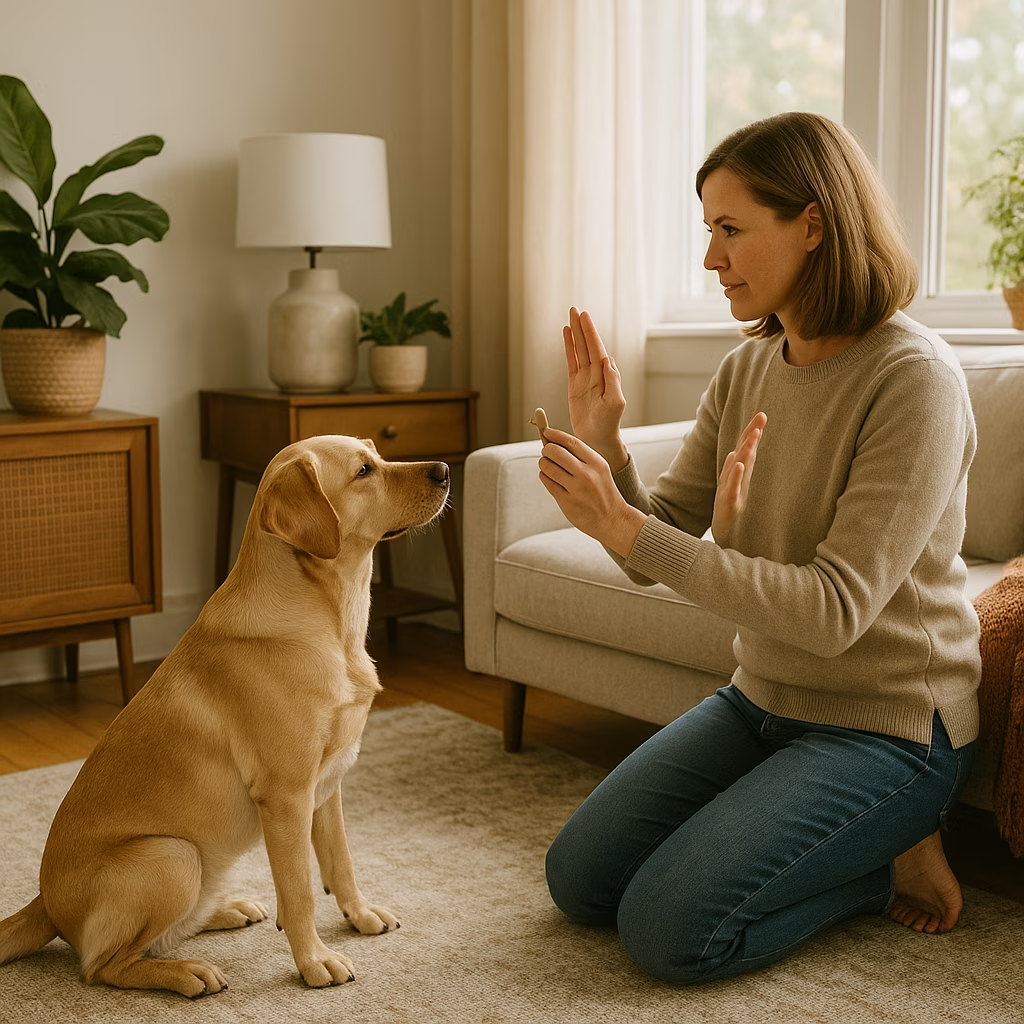
The Fear Spectrum: From Whimpers to Growls
Luna taught me that fear manifests in countless ways. Sometimes it was subtle—her ears would flatten against her head when my neighbor wearing his virtual reality headset approached. Other times it was dramatic: full-body trembling during the annual New Year's holographic fireworks display. I documented her reactions in my smart pet journal app, creating a fear inventory that surprised me with its complexity:
-
Environmental triggers: Autonomous vehicle sounds, smart home device alerts, solar panel hums
-
Social triggers: People wearing augmented reality glasses, children with hoverboards, other dogs wearing tech harnesses
-
Isolation triggers: Being alone during my remote work meetings, separation when I used the home teleportation pod (yes, they became mainstream in 2026!)
What shocked me most was discovering that Luna's breed made her particularly susceptible to noise phobias. Research confirmed what I observed: Northern breeds and larger dogs like German Shepherds show heightened sensitivity to auditory stimuli, something that's become more challenging with today's constant technological hum.
When Flight Turns to Fight
The scariest moment came when I reached into Luna's smart crate to adjust her cooling pad. She snarled—a sound I'd never heard from her—and snapped at my hand. The moment I opened the crate, she transformed back into my sweet, licking puppy. This was textbook fear-induced aggression: trapped with no escape route, she defaulted to the only defense mechanism left. Modern crate designs have improved, but the psychological response remains primal.
I learned to recognize her warning signs through trial and error:
| Early Signs | Intermediate Signs | Full Fear Response |
|---|---|---|
| Whale eye (showing whites) | Low growling | Snapping/biting |
| Lip licking | Raised hackles | Fear-induced elimination |
| Yawning | Barking in bursts | Panic running |
| Turning away | Submissive urination | Destructive behavior |
Building Confidence in a Digital World
Traditional socialization methods needed updating for 2026. Instead of just visiting parks, we practiced:
-
Gradual tech exposure: Starting with muted smart devices, then introducing sounds at low volumes
-
Controlled virtual introductions: Using pet-friendly VR programs to simulate encounters with uniformed personnel or unusual animals
-
Confidence circuits: Creating obstacle courses with both natural (logs, tunnels) and technological (quiet robots, flashing lights) elements
Our breakthrough came with interactive play. Tug-of-war with a textured smart towel that changed colors when pulled hard became her favorite game. Each successful pull earned treats from an automatic dispenser, building positive associations with engagement rather than retreat.
The Socialization Window Reimagined
Luna hit her fear period right at 5 months—coinciding with my city's annual drone light show. Instead of hiding her indoors, I worked with a canine behavior specialist who used modern techniques:
-
Counter-conditioning with biometric feedback: We monitored Luna's heart rate while gradually exposing her to recorded firework sounds, stopping before panic set in
-
Scent therapy: Introducing calming pheromone diffusers specifically designed for tech-anxious puppies
-
Structured alone time: Using pet cameras with two-way audio to comfort her during short separations
When Professional Help Became Essential
Despite our progress, Luna's fear of autonomous delivery robots persisted. The turning point came when I realized punishment—even a stern "no"—made everything worse. Fear isn't disobedience; it's a survival response. We consulted a veterinary behaviorist who prescribed:
-
Situational anti-anxiety medication for unavoidable triggers (like mandatory building evacuation drills)
-
Targeted desensitization protocols using robot toys that gradually increased in movement complexity
-
Canine cognitive games on waterproof tablets to build problem-solving confidence
The Unexpected Benefits of Understanding Fear
Three years later, Luna's journey transformed how I view pet ownership in our technology-saturated world. Her fears forced me to slow down and observe—really observe—how modern life affects creatures without our digital literacy. I started a local support group for owners of "tech-anxious" pets, where we share strategies like:
-
Creating "low-tech zones" in homes where all smart devices are disabled
-
Using 2026's advanced noise-cancelling pet wear during known triggering events
-
Implementing "fear-free" veterinary visits with clinics offering virtual pre-visits
Most importantly, I learned that fear management isn't about elimination but about creating resilience. Luna still startles at sudden holographic advertisements, but now she looks to me for guidance rather than pure panic. We've developed a trust language: when I say "we're safe" in a particular tone, her shoulders visibly relax.
Looking Forward: The Future of Fear-Smart Puppies
As genetic testing becomes more advanced, breeders in 2026 are beginning to screen for anxiety markers. Some forward-thinking trainers offer "puppy preparedness" classes that gently expose litters to common technological stimuli before adoption. The pet industry has responded with:
-
Smart beds that detect rising stress hormones and release calming scents
-
Interactive toys that adjust difficulty based on a puppy's confidence level
-
VR socialization programs approved by veterinary behaviorists
My journey with Luna taught me that fear, properly understood and addressed, can become a pathway to deeper bonding. Her vulnerabilities revealed my own—my impatience, my assumptions, my tendency to prioritize convenience over connection. In helping her navigate a world of strange noises and digital unknowns, I learned to navigate my own anxieties about this rapidly changing era.
Today, when I see Luna confidently trotting past a cleaning robot or sleeping through a thunderstorm that's tracked on my weather app, I don't just see a well-adjusted dog. I see proof that with patience, science, and empathy, we can help our furry family members find their courage—even when the world keeps inventing new things to be afraid of. And in doing so, we often discover our own resilience reflected back in their trusting eyes.
As detailed in UNESCO Games in Education, structured, low-pressure play environments can support learning and emotional regulation—an idea that maps well to helping a fearful puppy build resilience through gradual exposure, predictable routines, and confidence-building “games” rather than punishment when novel stimuli (like drones, robots, or loud alerts) trigger anxiety.
Leave a Comment
Comments